
Recent outbreaks of food poisoning across the UK have focused the attention of specifiers, Environmental Health Officers and building owners on the materials used and the cleaning regimes adopted in hygiene-critical locations such as food production and preparation areas.
According to research published by the Food Standards Agency in June 2014, there are more than 10 million cases of food poisoning in the UK a year, with 500,000 cases attributed to know bacteria such as salmonella, E-coli and listeria.
While there is good understanding of the causes of product contamination, reports of food poisoning are on the increase, for example cases of E-coli rose by 3% in 2013.
Specifiers and contractors can reduce the risk of infection by the use of ceramic tiling which is listed as the recommended surface for food preparation, production, treatment and storage by the Institute of Environmental Health Officers.
In fact ceramic tiles have been used for decades as the preferred choice for floors in food production areas as they are easy to install, easy to clean and disinfect, hard wearing and importantly they comply with all the relative legislation.
Ceramic tiles and epoxy grouts have been proven in the past to conform to the requirements of The Food Safety (General Food Hygiene) Regulations 1995. Independent testing determined their cleanability and non-tainting properties.
When installing floor tiles in food production areas, one must first consider the background. Allow a minimum of six weeks for concrete floors to dry before screeding/direct fixing, and three weeks drying time for screeds that are one part cement to 3.5-4.5 parts sand by weight. Bonded screeds should be designed to a minimum thickness of 40mm, while unbonded floors should be 50-70mm thickness laid over 1000 gauge polythene or building paper.
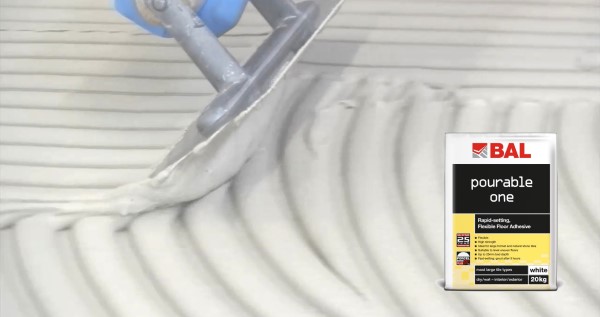
Once the background is dry, rigid, stable and suitably prepared to remove any barriers to adhesion, it is crucial to use the appropriate tile adhesive. As food production areas are likely to see heavy foot traffic, a highly-polymer modified e.g. minimum C2 cementitious adhesive or epoxy adhesive to BS EN 12004: 2007+A1 2012 is recommended. If required, deformable tile adhesives offer greater resistance in areas subject to limited movement and/or vibration.
For areas of food production it is crucial to grout ceramic tiles using a suitable epoxy-based product. Epoxide resin-based grouts are specifically formulated to provide a durable, waterproof and an abrasion-resistant surface that is hygienic and impervious.
The cured grout does not permit the entry of bacteria or dirt, does not transfer taints to foodstuffs and is easy to decontaminate and maintain in a sterile condition. They are also resistant to a wide range of chemicals including food acids and oils.
When grouting, it is important to physically segregate adjacent food preparation areas which are due to be operating during the grouting process, even if the risk of tainting food is very low.
It is important to note that ceramic tiles in kitchens and food production areas should be kept dry and not brought into service until the epoxy grout has cured and is hard. Contact between food and tiling should be avoided for seven days.
Perimeter movement joints should be sealed with an anti-mould silicone sealant to protect against bacteria and black mould which could cause an infection risk in kitchens or areas of food production or preparation.
Anti-mould silicone sealants contain additives which penetrate bacteria cell walls upon contact, destroying the cell’s ability to function, grow and reproduce. Anti-bacterial additives are not a poison and do not build resistance, in addition they are environmentally friendly and safe for the consumer.
In larger floor areas stainless steel reinforced movement joints should be used for intermediate joints, especially where they are likely to be traversed by wheeled traffic. Once complete it is important that building owners adopt rigorous cleaning regimes. Consider the use of an anti-bacterial tile cleaner on a regular basis to renew the appearance of existing grouts and inhibit the growth of bacteria or mould.
So our message is simple, with the right preparation and products, ceramic tiles provide the perfect flooring solution for hygiene critical locations, helping to reduce the risk of an outbreak of infection that could cause serious commercial or reputational damage.
By David Wilson, UK Technical Services Manager
(First published in Contract Flooring Journal)