
How do you prevent water damage in wetrooms, showers and bathrooms?
The most effective way to prevent failures in wet areas is to use a suitable waterproofing (tanking) system before tiling. Products like BAL Waterproof 1C help protect backgrounds from water ingress which can cause mould, breakdown of background and costly long term damage.
Why is waterproofing essential in wetrooms and bathrooms?
When tiling wet areas such as bathrooms, showers, wetrooms and pools, correct product selection is critical. Tiles, tile adhesives and tile grouts are not waterproof on their own and do not provide adequate protection against water penetration.
Without proper waterproofing, water can travel through grout joints, screeds and substrates—leading to damp, erosion and structural failure.
Do British Standards require waterproofing in wet areas?
Yes. Both British Standards (BS 5385) and NHBC Standards 2023 state that:
- In wet areas or areas of repeated or persistent wetting, backing surfaces must be protected by a suitable tanking system
- Tiles, impervious adhesives and grouts are not a substitute for waterproofing
BS 5385 Part 4 specifically confirms that ceramic tiles with adhesive and grout do not replace the need for a waterproofed installation in baths, showers or wetrooms.
What is the best place to apply waterproofing in a wetroom?
Waterproofing can be installed:
- Within the building structure, or
- On the substrate surface before tiling (preferred)
Applying waterproofing directly to the substrate prevents water from tracking through screeds or backgrounds into adjacent areas.
In a wetroom, waterproofing should always be specified on both walls and floors.
What has changed with new build homes?
From January 1st 2025, NHBC the UK’s leading provider of warranty and insurance for new homes in the UK implemented new requirements for their members.
This meant that any new house in the UK that is built (foundations laid from 1st January 2025) will require tiling in wet areas to be tanked with an EAD certified system to receive warranty and insurance, if they are tiling:
- Shower over bath OR shower with shower tray, with standard flow rate <12 litres/min – WHEN the substrate manufacturer’s guidance advises a tanking system is still required, or has not passed NHBC Table 2 assessment requirements.
- ANY shower over bath OR shower with shower tray, with a flow rate >12 litres/min.
- ANY wet room (fully tiled wall and floor, shower area).
What is BAL Waterproof 1C?
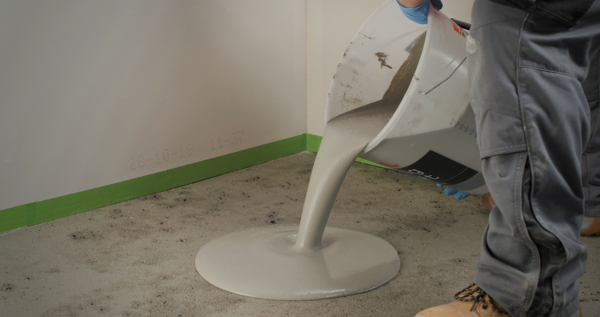
BAL Waterproof 1C is an EAD-approved ready mixed, one coat tanking solution designed for fast and effective waterproofing in domestic wet areas.
Key benefits:
- Ready to tile after just 2 hours
- No priming required on most common substrates*
- One coat application to walls and floors
- Crack bridging from 2–3mm
- No tapes or matting required
- Coverage up to 6m²
- Low VOC and made with 40% recycled materials
How is BAL Waterproof 1C applied?
BAL Waterproof 1C can be applied using:
- A brush
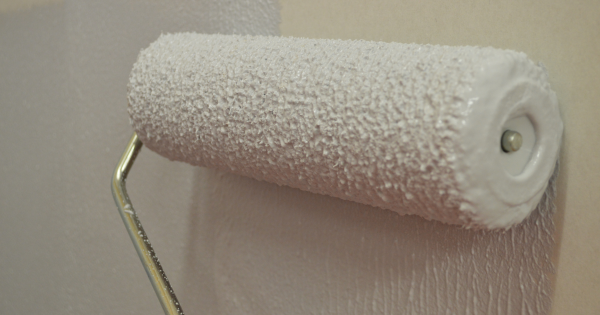
- A roller
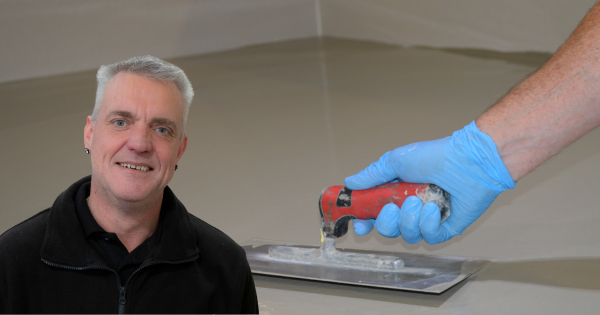
- A 4mm notched trowel
Formulated with fibre strand technology, it offers improved strength, easy to apply rheology and excellent coverage.
A minimum dry thickness of 0.8mm provides complete protection against water ingress and background erosion.
Do I need to prepare the surface before waterproofing?
Yes. Before applying any waterproofing system, ensure the background is:
- Flat
- Clean
- Dry
- Sound
- Free from contamination
Where necessary:
- Render walls to achieve flatness
- Use a levelling compound such as BAL Level Plus, BAL Level Max or BAL Level Fast on floors
BS 5385 5 requires SR1 surface regularity (maximum 3mm deviation under a 2m straightedge).
Should corners and penetrations be reinforced?
Yes. All corners, junctions, penetrations and cracks should be reinforced with scrim tape to prevent the waterproof coating from seeping into the substrate and to maintain membrane integrity. For an EAD approved application – reinforce with BAL Waterproof 1C Tape and BAL Waterproof 1C Matting (on wet room floors).
How long should waterproofing dry before tiling?
Drying times vary by product:
- BAL Waterproof 1C: ready to tile in 2 hours
- Other systems: may require up to 24 hours
Always follow manufacturer guidance before tiling.
What should I consider when choosing adhesives and grouts for wet areas?
When selecting tile adhesives and grouts for wetrooms, showers or bathrooms, consider:
- The substrate
- Tile type and size
- Frequency of water exposure
- Environmental conditions
Correct compatibility is essential for long term performance.
Does BAL Waterproof 1C ever need priming?
Priming is only required on:
- Plaster
- Cement boards
- BAL Board (tiling side)
In these cases, apply one coat of neat BAL Primer 1C and allow to dry for 15–30 minutes before waterproofing.