
What are the common issues when grouting and how can they be avoided?
Cement-based grouts remain the most widely used option for tiling installations, available in an extensive range of colours to suit virtually any project.
So what are the common issues when grouting and ways to avoid these?
Cement-based products are typically composed of cement binders, fillers, polymers, pigments, and performance-enhancing additives.
While grout performance is measured under EN standards, final colour and appearance are heavily influenced by mixing consistency, application method, tile type, and site conditions.
Ensuring correct grout application is every bit as important as applying tile adhesive.
Taking the right steps during mixing and installation will significantly improve appearance, durability, and customer satisfaction.
1. Why do some tile grouts vary in colour consistency?
Colour variation is one of the most common concerns raised by installers and end users. Several factors can contribute:
- Inconsistent Water Content
Variability in the water-to-powder ratio from mix to mix can cause noticeable shade differences. Always measure water accurately and maintain consistency throughout the job. - Site Conditions
Temperature shifts, humidity, and drying conditions influence the hydration of cement. Overwashing during initial cleanup, delayed removal of residue, or grouting over still-wet adhesive can also alter the final colour. - Tile Porosity
Tiles with differing levels of absorbency will remove moisture from the grout at different rates. For example, ceramic tiles are more porous than porcelain, which can result in uneven drying and visible colour differences. Use tiles of similar absorbency on the same plane wherever possible. - Lighting Conditions
Lighting can significantly affect perceived colour. British Standards state that fixers should work under lighting conditions that closely match the final installed environment. Differences in lighting direction or intensity between installation and use may cause the grout to appear inconsistent. - Grout Depth and Tile Plane
Recessed grout lines or slight variations in tile alignment may create shadows, further affecting colour perception.
2. What is the white powdery substance on my grout joints?
This is called efflorescence. Efflorescence is recognised by white, powdery discolouration caused by salt deposits within the grout. It appears in two forms:
Primary Efflorescence
Caused by the natural movement of salts within OPC-based (Ordinary Portland Cement) products during the curing process. Choosing non OPC cement-based grouts like BAL Micromax3 ECO can help minimise this risk.
Secondary Efflorescence
Triggered by moisture movement from the substrate—often due to:
- Rising damp from unprotected subfloors
- High water tables
- Residual moisture in adhesives
- Excessive water used during clean-down
- High humidity during drying
Prevention Measures:
- Ensure direct-to-earth floors have an adequate DPM (Damp Proof Membrane).
- Avoid working below 5°C; increase site temperatures in cold conditions.
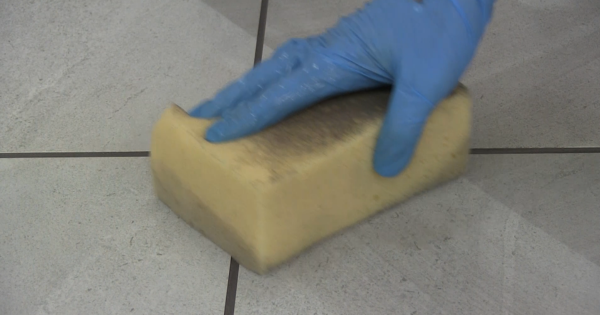
- Use only a damp, not wet, sponge for the initial wash-off
- Delay grouting in very humid or wet conditions, or use dehumidification.
- Do not mix grout too wet or apply it before the adhesive has cured.
3. Why has my grout cracked?
Grout cracking can occur along tile edges or across joints (ladder cracking). Common causes include:
Installation and Substrate Issues
- Movement stresses or deflection in the substrate
- Thermal movement or moisture-related expansion
- Tiling onto uncured newly laid backgrounds
- Poor adhesive coverage (e.g., not solid-bed fixing)
- Lack of, or incorrectly positioned, movement joints
Ladder Cracking
Characterised by cracks running across grout joints. Typically caused by:
- Rapid moisture loss during drying
- Excessively wet grout mixes
- Incorrect powder-to-water ratio
- Tile porosity affecting hydration
To prevent this, ensure:
- Controlled drying conditions below 25°C
- Correct grout mixing ratios
- Appropriate tile selection or surface preparation
4. What is the correct grout to choose?
Grout formulations vary by brand. Some brands rely on separate colour fillers that must be mixed as whole bags to maintain uniformity. BAL grouts contain built in colour fillers, allowing partial mixes without compromising colour consistency—offering greater control on site.
Need Technical Support?
Expert guidance is always available.
HelpCentre.building-adhesives.com